Strategies for Playing Crazy Time: What Actually Works and What Doesn’t
Crazy Time is often included in welcome offers, free bets, or loyalty promotions — the exact terms depend on the casino and your region. Below is the basic process to claim a bonus and avoid common restrictions.
 Legal casino
Strategies review
Demo in browser
Legal casino
Strategies review
Demo in browser
US 18+
Play responsibly
Only licensed operators

This article examines popular betting approaches in Crazy Time: what is rational in them and what rests on an illusion of control. The goal is not to “beat” the math but to understand how the game works, manage risk, and build a sustainable personal play model. Exact parameters of the game (distribution of wheel segments, multipliers, RTP, and so on) may vary depending on the game version and the operator, so the concepts below are broadly applicable.
How the Game Works and Why It Matters for Strategy
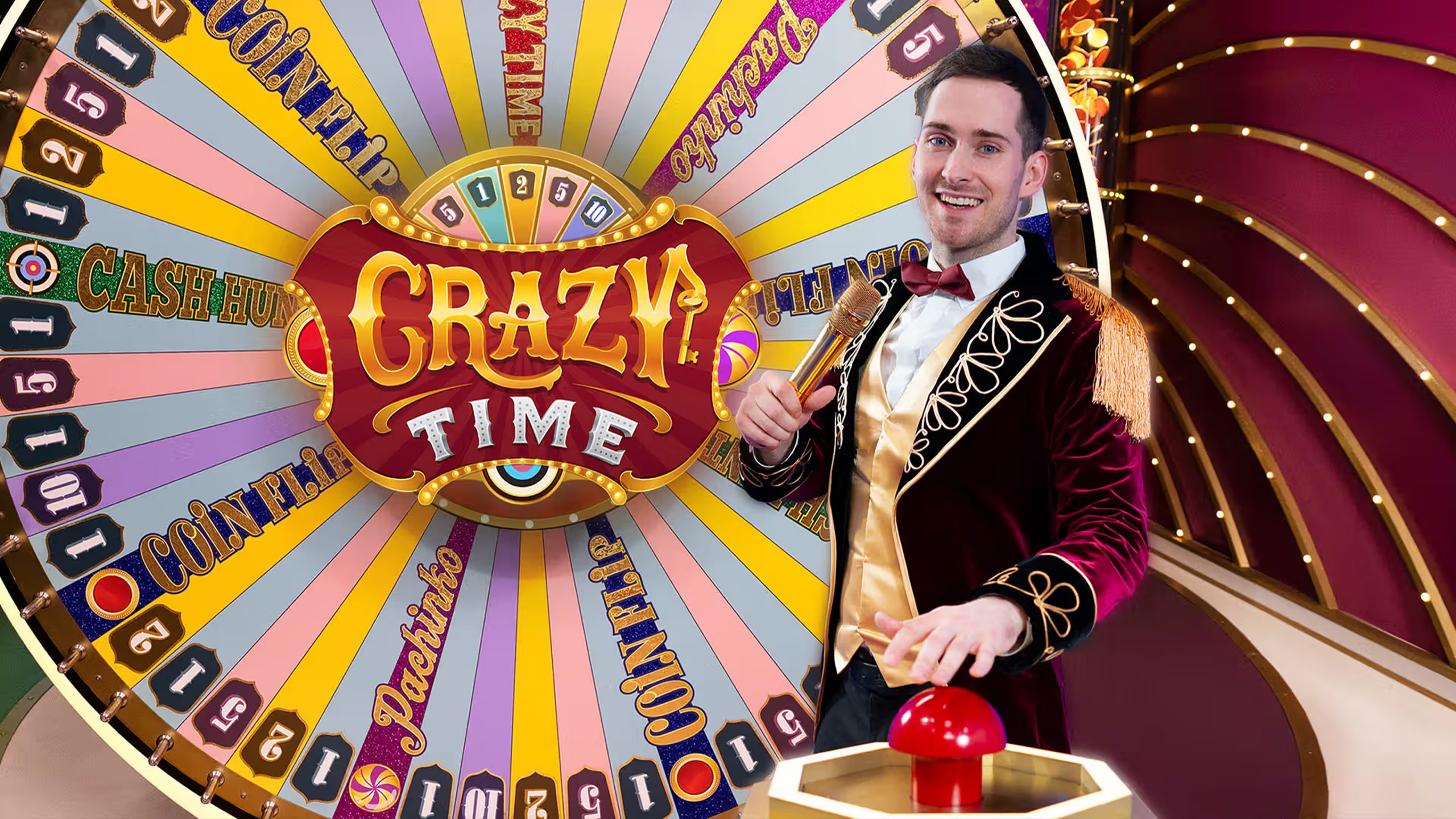
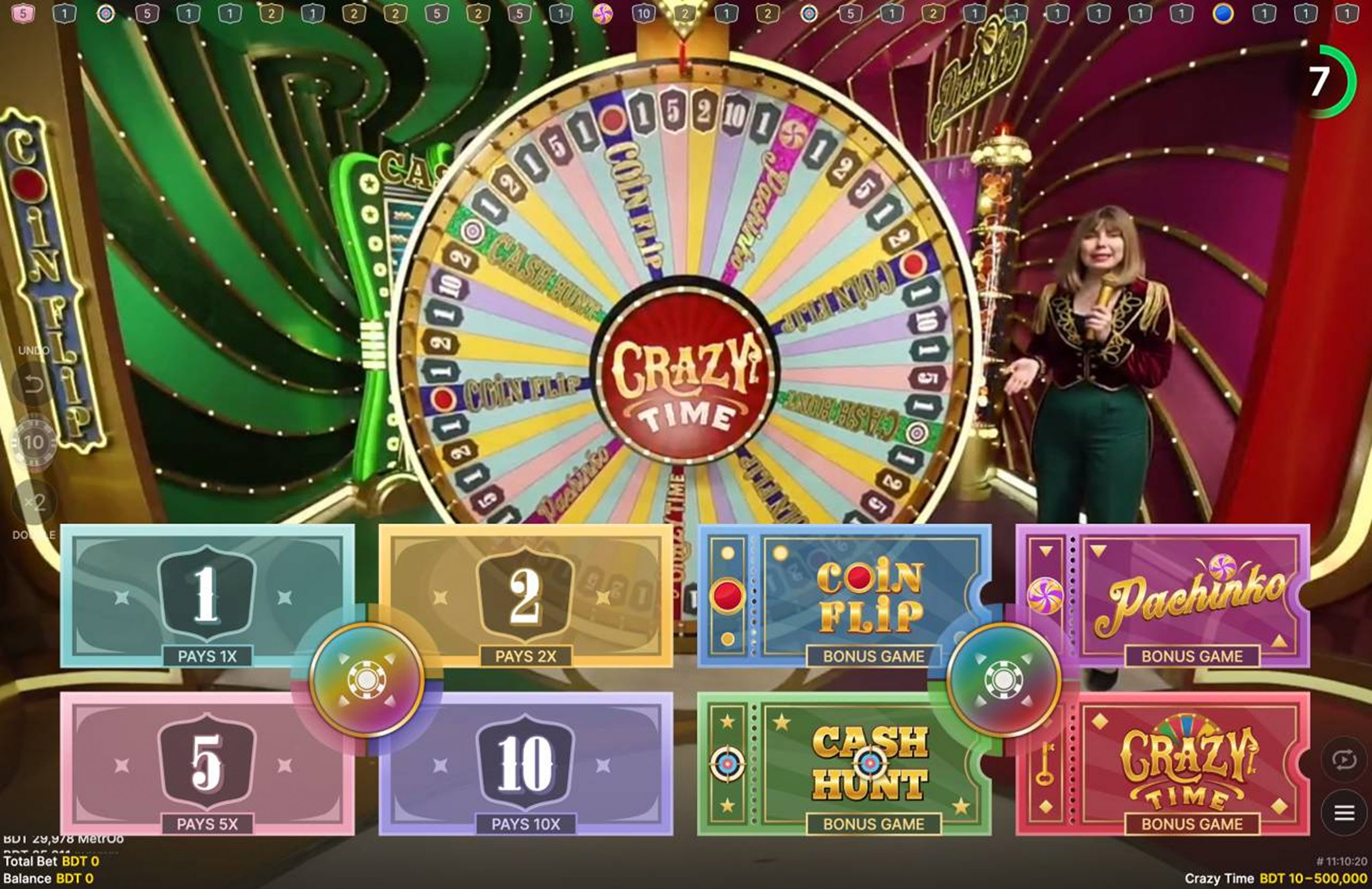
Crazy Time is a round-based game with a wheel and additional rounds. Each spin is independent of the previous one, and outcomes are random. This means neither “streaks” nor “cold” segments create predictable patterns.
Different versions may vary in the share of segments and bonus-round parameters. Some mechanics amplify winnings, which increases volatility. For strategy, this means the math is predefined; what remains on the player’s side is stake selection, session length, and bankroll control.
Core Strategy Types People Talk About
 Several approaches circulate in the community. First is “broad coverage”: Second is “bonus hunting”: Third is staking schemes: Fourth is “trend/stat play”:
 What Is Actually Under the Player’s Control
Players do not change outcome probabilities, but they do control how those probabilities translate into money and emotions. Bankroll, stake size, number of simultaneous outcomes covered, and session duration are the real levers.
It helps to set stop thresholds for time and result in advance. If a demo is available, use it to test how your configuration behaves over a longer run. Also test interface and connection speed: stream delays and lag during the betting window affect experience even if they do not change the math.
Quick pre-session checklist:
-
define bankroll and an acceptable single bet as a fraction of that bankroll;
-
choose how many outcomes to cover and fix rules for when to change that;
-
set a time limit and a result deviation limit that end the session;
-
test the stream: video quality, latency, stability on your device.
Strategy Review: What Works in Them and What Doesn’t
Below are common approaches and their rational parts. The table is not about “pros vs cons” dogma; it maps trade-offs. We do not cite specific limits or multipliers because exact values may vary depending on the game version and the operator.
| Strategy | Essence | What you control | Advantages | Risks/why it may fail | Who it suits |
|---|---|---|---|---|---|
| Broad coverage of base segments | Several bets on more frequent outcomes, sometimes without bonuses | Number of covered positions, stake per position | More frequent small returns, steadier cash flow | Diluted wins; rare bonuses pass by | Players wanting smoother variance |
| Bonus hunting | Bets mostly on bonus outcomes | Bankroll share on rare outcomes, session length | Simple focus, potential for rare larger results | Long empty streaks, higher emotional strain | Players comfortable with volatility |
| Flat staking | Constant stake on the same outcomes | Outcome choice and fixed amount | Transparent, enforces discipline, easier planning | Slow recovery after drawdowns | Beginners and discipline-builders |
| Percentage of bankroll | Stake scales with current bankroll | Percentage allocation | Auto-adapts to growth/drawdown | After sharp drawdowns stakes get tiny; after growth they get too large | Those who track and accept dynamics |
| Soft progression | Moderate increase after a loss | Max steps, stake cap | Sometimes speeds a rebound in short streaks | Hits table limits and long-streak risk | Experienced players with hard caps |
| Aggressive progression | Sharp stake increases after misses | Step and loss limits | Fast “catch-up” in very short streaks | Risk explodes quickly; very limit-sensitive | Virtually no one seeking controlled risk |
| Trend/stat play | Bets on “hot/cold” segments | Rules for switching focus | Provides structure, reduces impulsivity | Overfits noise; independence of rounds persists | Players needing routine and guardrails |
Bottom line: the functional core of any strategy is not “predicting” outcomes but discipline around duration, stake size, and coverage breadth. “Chasing” usually collides with table limits and rising risk faster than with any supposed statistical “inevitability.”
Errors and Misconceptions That Break Strategies
The main error is confusing hit frequency with profitability. Frequent small wins feel like control, but over time coverage costs and the size of rare misses can eat the result.
Second is believing in streaks. The past sequence does not change the next-spin probability. “It hasn’t hit a bonus for a while” does not make it closer mathematically; it only adds emotional weight to raising stakes.
Third is underestimating constraints. Bet limits, the decision-time window, and personal stress thresholds are discussed less than “patterns,” yet they have dismantled more “systems” than any probability.

Red flags of pseudo-strategies:
-
promises of stable income without limits and variance,
-
ignoring long losing streaks and their probability,
-
appeals to “secret signals” in the UI or chat,
-
advice to keep increasing stakes until the “inevitable” hit,
-
substituting rule analysis with reading the host’s “mood,”
-
showcasing short lucky runs without long-run data.
UX and Visual Effects: How the Interface Nudges Decisions
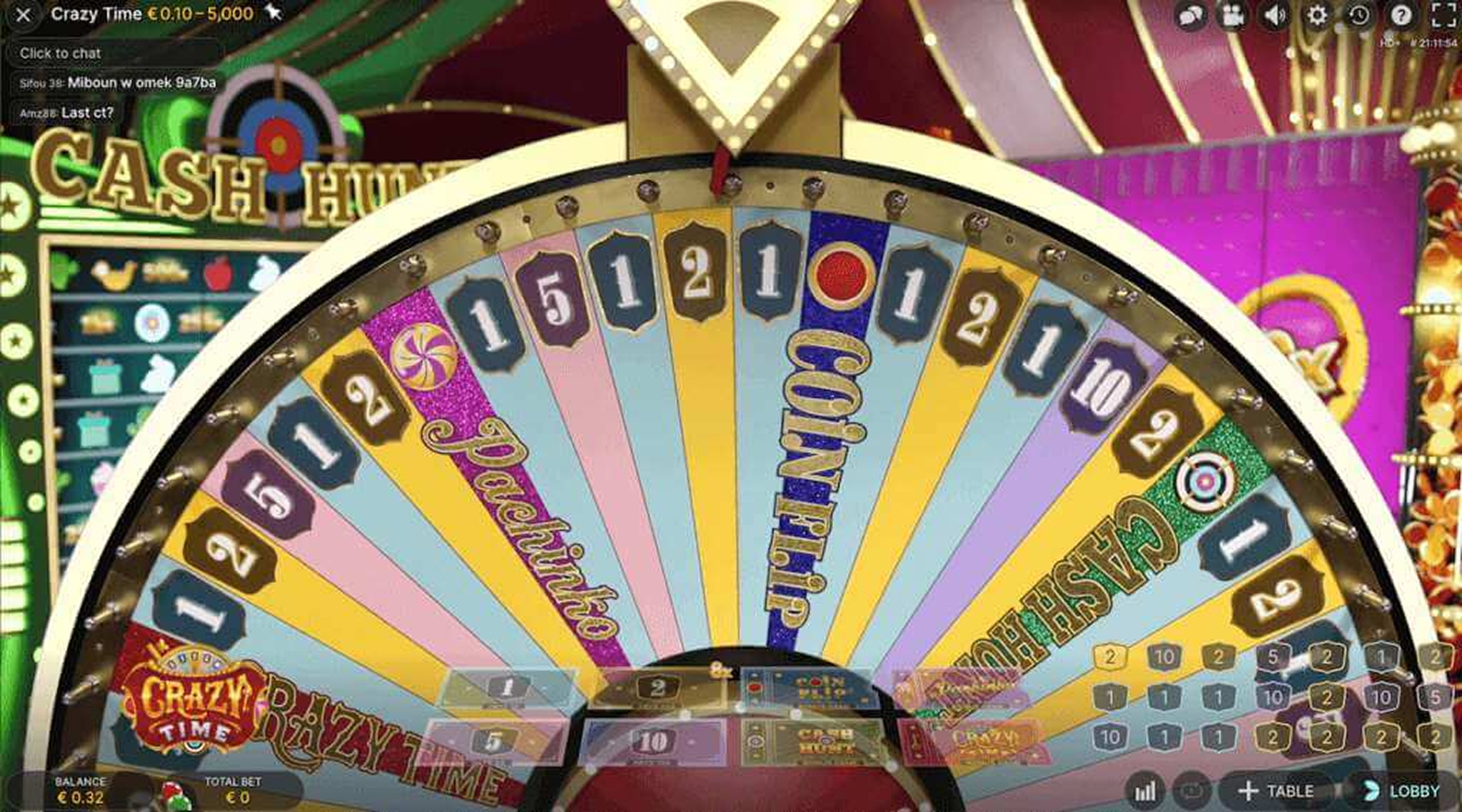
Game interfaces use animation, sound, and near misses. These amplify attention to rare events and tilt decisions toward “almost hit, so add more.” The host and chat create social dynamics that can push spontaneous betting.
Helpful practice is to standardize behavior. Mute unnecessary sound, hide chat, fix stake size, and never change it mid-round. If the interface shows recent-spin stats, decide upfront how you will use them: as a trigger or as data you deliberately ignore to preserve independence.
Performance and Adaptivity: Tech and Environment Matter
A strategy is powerless if you cannot place bets due to lag. On mobile devices, performance depends on model, memory state, and network quality. With unstable connections, stream quality can drop and the betting window may close while you are still deciding.
Practical steps:
- use a stable connection
- limit background processes
- keep the device powered during long sessions
- avoid switching apps during critical moments.
Exact technical requirements for device and connection speed differ by version, so test via demo or with small stakes before scaling.
Evolution of Approaches: From Progressions to Risk Control
Historically, early wheel-game tactics centered on progressions. They look logical over short stretches and sensational in “I recovered yesterday” stories. Communities later converged on limiting progression steps and setting a loss cap before any pattern talk.
Then came “broad coverage” to smooth variance and avoid idle spins between bonuses. This stabilized emotions, not results. Next was obsession with last-spin statistics. It looks analytical, but in the long run spins stay independent and math stays prepaid.
Today, a resilient model is a mix of discipline, demo testing, and clear stop thresholds. You do not control probabilities; you control how they affect your time and money.
Building Your Working Model: Practical Takeaways
Start with a session goal.
- If you want a set time with moderated volatility, choose flat staking and moderate coverage.
- If you want rare potentially larger outcomes, focus on bonus outcomes with fewer simultaneous bets and a hard cap on consecutive misses.
Define stake-change rules.
- Percentage-of-bankroll or flat staking are transparent.
- If you still use soft progressions, cap the number of steps and set a max stake well below platform limits.
Fix exit criteria.
- By time and by result. If the result is positive and exceeds a preset threshold, end the session.
- If it is negative and hits your deviation limit, also end the session.
Log results simply: date, staking scheme, duration, result, subjective notes.
Revisit your configuration periodically. Add or remove coverage if frequent small returns do not offset rare misses. Remember: exact coefficients, limits, and multipliers depend on the version and operator, so moving strategies between venues requires retesting.
FAQ
No in the sense that a strategy does not change outcome math. It affects pace, volatility of your results, and discipline, not the probabilities.
It structures decisions but does not increase the next-round chance. Spins are independent; the recent stats reflect random fluctuation.
Aggressive progressions hit limits and blow up risk. Soft progressions are only viable with hard caps on steps and a predefined loss limit.
It is a risk-allocation choice. Broad coverage increases small returns and smooths the curve; focus increases volatility and demands patience.
No. They may boost engagement, not provide reliable information about the next round.
Yes. A log shows how your scheme behaves over time and where you tend to break your own rules.
Not probabilities, but it affects experience. Delay can make you miss the betting window, so infrastructure matters.
No. There are principles: fix bankroll, limit duration, choose a simple staking setup, and test it on your platform, bearing in mind exact values may vary depending on the game version and the operator.