How to Play Crazy Time: A Step-by-Step Guide for Beginners
Crazy Time is often included in welcome offers, free bets, or loyalty promotions — the exact terms depend on the casino and your region. Below is the basic process to claim a bonus and avoid common restrictions.
 Legal casino (DGOJ)
Strategies review
Demo in browser
Legal casino (DGOJ)
Strategies review
Demo in browser
US 18+
Play responsibly
Only licensed operators
How to Play Crazy Time: A Step-by-Step Guide for Beginners
Crazy Time is a live game built around a large wheel and several mini rounds where you bet on segments, the spin determines the outcome, and extra mechanics may modify results. New players often find the show “fast,” but the logic is simple: choose what you want to predict, understand what happens in bonus rounds, and set your budget and session length in advance. Below is a breakdown of how it works, how to set up your first session, and practical control tips.
Exact numerical parameters (for example, RTP, multiplier ranges, or limits) can vary by game version and operator. This guide focuses on mechanics and player controls.

What Crazy Time Is and How a Single Round Works
The core is a big wheel with numeric and bonus sectors. Before the spin, you mark one or more segments you want to bet on. When the round starts, the wheel lands on an outcome, and if it matches your choice, the bet is settled according to that segment’s rules. Numeric segments pay by a basic “number as multiplier” idea, while bonus segments launch mini games with separate rules.
There is also a “top slot” above the main wheel. It can sometimes enhance a specific segment with a multiplier or a special modifier. This doesn’t happen every time and depends on the version, but the idea is straightforward: if the enhanced segment coincides with the result, potential payout may increase.
A round is quick and predictable: betting window, spin, stop, settlement. The host’s commentary and visuals add entertainment but don’t change the math.

Step-by-Step: From Zero to Your First Bet
-
Review the interface. Locate the bet panel, balance, outcome history, and video quality settings. Check the sound toggle and where to find help/rules.
-
Set budget and stop rules. Fix the total amount you’re willing to use and the session length in minutes or number of rounds. Decide in advance the loss threshold that ends the session.
-
Choose a simple approach. For starters, pick 1–2 segments per round. One numeric and one bonus is enough to learn the rhythm.
-
Set stake size. Use a minimal comfortable amount on your chosen segments. Smaller stakes help you gauge hit patterns in your specific session.
-
Check stream quality. If video stutters, lower quality or switch to a stable connection. Lag reduces comfort, especially in interactive bonuses.
-
Play 10–20 rounds. This is enough to feel the tempo, see how your picks perform, and get a realistic view of mini-game frequency in your session.
-
Adjust the plan. If volatility feels higher than expected, reduce the number of active segments or lower stakes. If it feels too flat, experiment within your limits.
Segments and Bets: Differences and Selection
Crazy Time has two segment types: numeric and bonus. Numeric segments are the “base,” bonus segments add interactivity and variability. Overview below, without specific probabilities.
| Segment | What happens on a hit | Why pick it | Player control during the round |
|---|---|---|---|
| 1, 2, 5, 10 | Settlement by basic number-as-multiplier logic | Smoother dynamics, transparent calculation | Stake sizing |
| Coin Flip | Mini game with a coin | Fast, straightforward bonus | No choice required, outcome is random |
| Cash Hunt | Grid of hidden icons | Interactive target selection | You pick a cell on the screen |
| Pachinko | Puck drops through pegs to a final pocket | Visual variability spectacle | No choice required, you observe |
| Crazy Time | Big bonus wheel with zones and modifiers | Most feature-rich bonus | Sometimes offers choices within the bonus |
Numeric segments suit those who want predictable settlement and fewer “branches.” Bonuses amplify entertainment and sometimes add player choices (for example, Cash Hunt). The top slot can occasionally enhance any segment, shifting short-term priority, but relying on recent history alone isn’t sound: it describes the past, not the next spin.
What You Control: Budget, Limits, Duration, Demo
Your leverage isn’t “beating the wheel,” it’s controlling participation conditions.
First, stake size and distribution. You decide how much to place on each segment and whether to split between numeric and bonus fields. This shapes your session’s volatility.
Second, duration. Set a limit by time or by number of rounds and stick to it. Crazy Time is fast; budgets can drain unnoticed.
Third, breaks. If the show’s pace rushes you, sit out a few rounds to watch flow and reduce FOMO.
Fourth, demo options. Some operators provide demos or tutorials. Availability and features vary; use them to practice the UI safely. Exact demo parameters and limits depend on the version and operator.
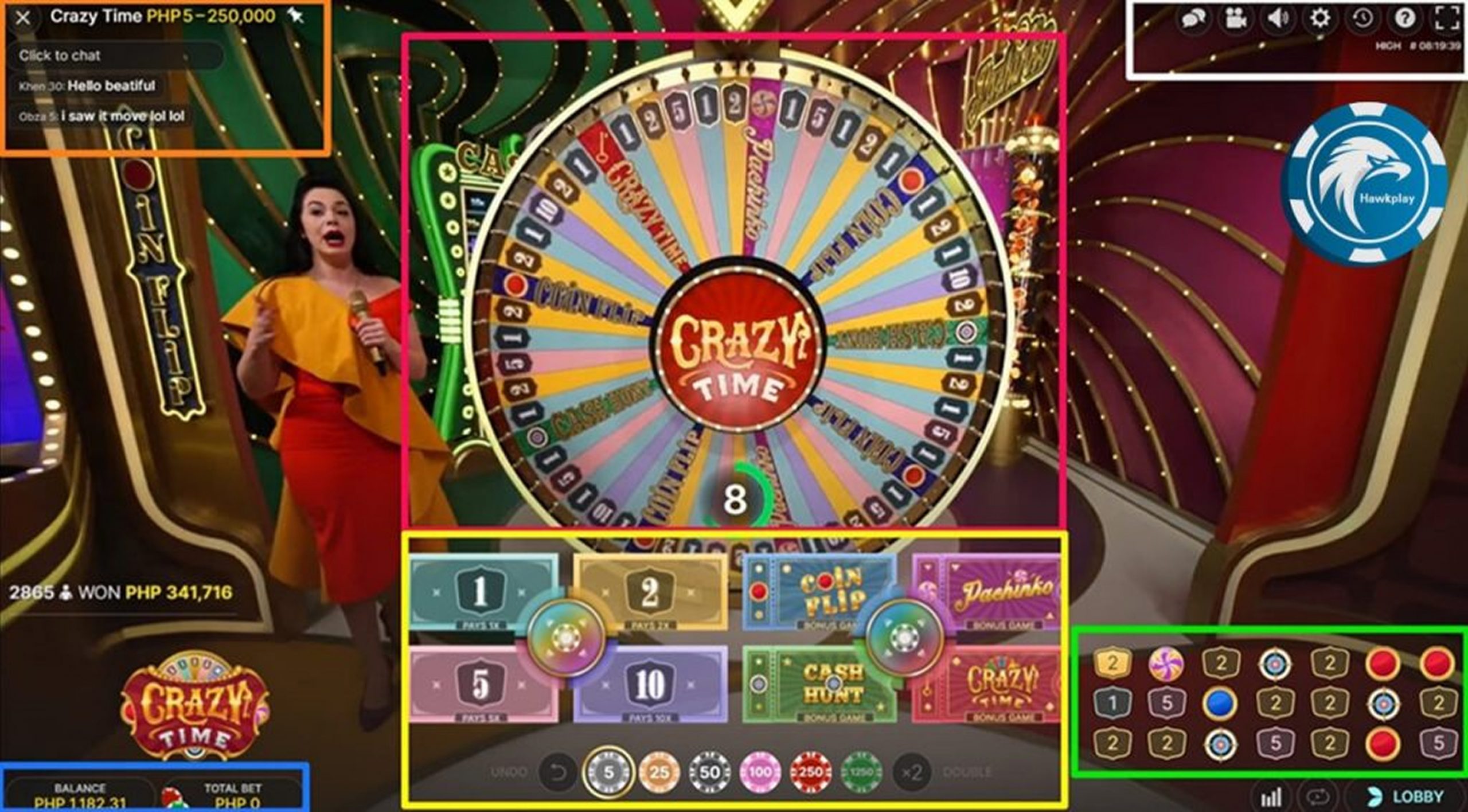
UX and Visual Signals: What to Watch
The interface is dense with cues. Focus on three areas. First, the bet panel: it shows your active fields and stake distribution. Second, the top slot: if a modifier appears, see which segment it affects, but don’t overrate one-off coincidences. Third, the betting timer: it’s short, so prepare choices early, not in the final seconds.
In bonuses the UI changes. In Cash Hunt you must select a cell in time; in Crazy Time follow on-screen prompts to confirm choices if applicable. Visuals engage but don’t carry “secret signals.” Live studio graphics present results determined by the game’s mechanics.
History is separate. It helps you sense rhythm but doesn’t predict. Streaks happen and don’t create a “due” outcome.
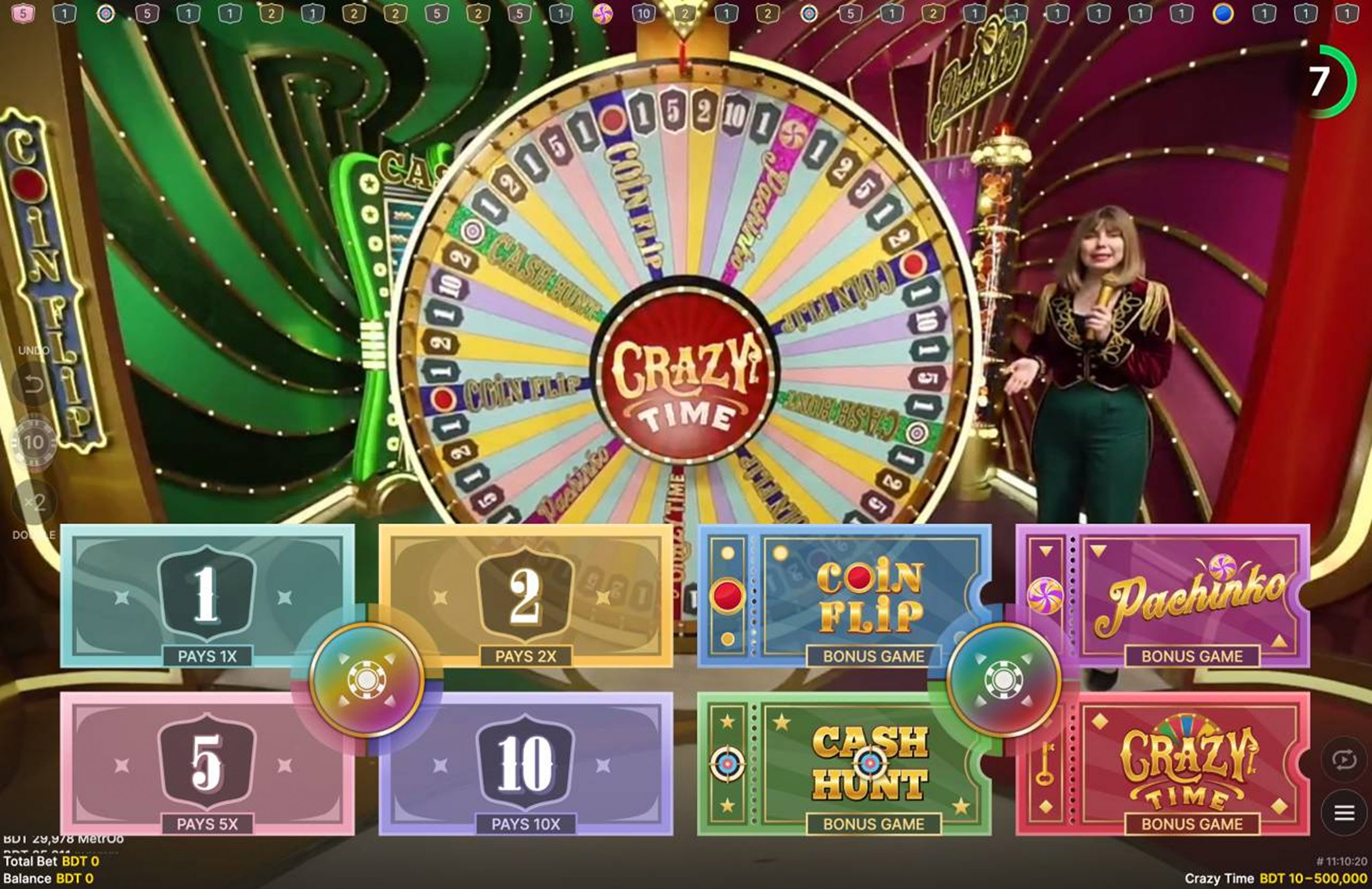
Performance and Adaptivity: Desktop, Mobile, Connection
Crazy Time streams live video. Stable connectivity and a healthy client are important.
On desktop it’s often easier to manage multiple segments due to screen size and layout. The mobile UI is adapted but requires precise taps in interactive bonuses. If you mis-tap, slow down, reduce active fields, or rotate the device.
Video quality usually auto-adapts, but you can lower resolution manually to avoid buffering on weaker connections. Audio doesn’t provide functional advantage; turn it off if it distracts. If control feels laggy, restart the session or close other network-heavy apps.
Exact technical presets depend on the specific implementation and operator. Check them before long sessions.

Typical Beginner Mistakes and Misconceptions
-
 Betting on too many segments at once. It “covers the field” but increases per-round spend and reduces volatility control.
 -
Raising stakes “because of the past.” History doesn’t oblige the next outcome. Streaks are normal.
-
Ignoring time budget. Without a timer, fast rounds lead to longer-than-planned sessions.
-
Over-focusing on bonuses. They’re flashy, but frequency and results vary by session. Balance them with numeric segments to smooth swings.
-
Playing with poor connectivity. Lag hurts interactive picks. Fix the network first.
-
Searching for “hidden patterns” in the host or animations. The host is entertainment. Outcomes are defined by mechanics, not gestures.
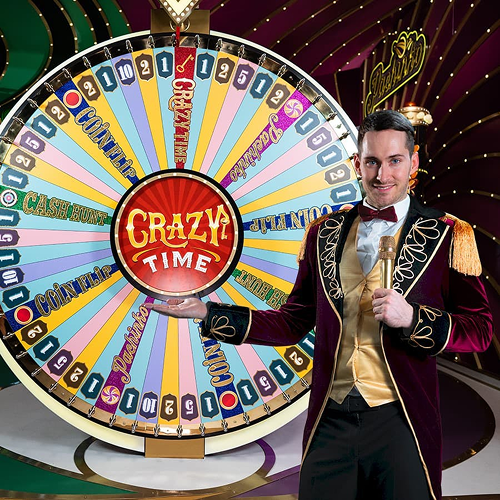
Format Evolution and Where Crazy Time Fits
-
The “wheel + bonus scenes” format evolved from simple number wheels to multi-stage shows. Interactive mini games expanded UX: not only pre-spin betting, but mid-round actions. The top slot added occasional random boosts that temporarily change segment priority. In live games, Crazy Time sits with titles where the core loop branches into a micro game. In slots, cascades (e.g., Reactoonz 2) add activity via meters; in Cluster Pays the emotion comes from chains of matches; here, a specific wheel sector triggers the branch. This is easy for beginners: the bet, event, and interaction are clearly linked. Versions may differ in visuals, round speed, micro decisions, and UI. Concrete numbers and limits vary; always check your version’s help.
Choosing a Participation Strategy: Practical Logic, No “Magic”
Strategy here isn’t predicting spins but structuring participation across segments and rounds. A practical beginner approach is “stepwise”:
- Start with 10–20 rounds on 1–2 segments at minimal stakes. Goal: learn the flow, not “force results.” Then add one bonus segment while keeping total budget unchanged to compare volatility. If you prefer a steadier rhythm, stay closer to numerics. If you enjoy rarer but more variable episodes, keep a single bonus in the mix.
- Match your tolerance for swings to your segment combo. That’s real control, not mining patterns from history.

Practical Takeaways
Crazy Time is simple at the base and layered in UX. Start small: 1–2 segments, clear time and budget limits, stable connection. Bonuses add interactivity, but you don’t need to chase them; their role depends on your volatility comfort. The top slot is a modifier, not a reason to abandon the plan. Numeric segments provide steadier pacing; bonuses inject variability.
All exact numbers and limits depend on version and operator. Use in-game help to confirm current parameters for your implementation.
FAQ
No. That inflates spend and reduces control. It’s better to pick 1–2 fields and adjust gradually.
History describes past events. It doesn’t increase the chance of “missed” fields on the next round.
A minimal comfortable amount. Early rounds are for learning tempo, bonuses, and UI.
No. They’re optional. They add interactivity and variability, but how often you target them is a preference and volatility question.
Lower video quality, close background apps, and switch to a stable network. Lag is especially annoying in interactive bonuses.
No universal choice. Align with your pace and volatility tolerance: numerics for smoothness, bonuses for variability.
Open the in-game help. Exact values can vary by game version and operator.
Whichever is more comfortable. Desktop helps with multiple fields; mobile is adaptive but needs precise tapping and a stable connection.