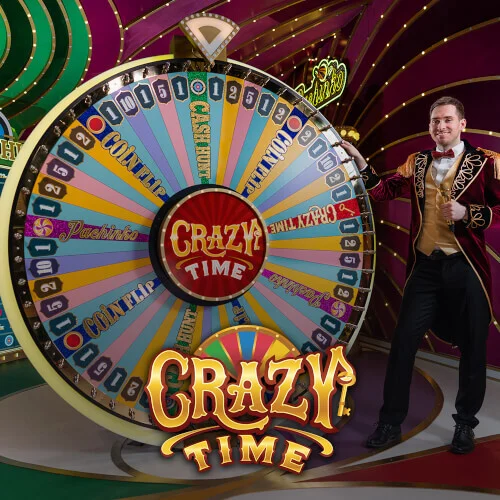
How the Crazy Time Wheel Works: Segments, Multipliers, and Randomness
Crazy Time is often included in welcome offers, free bets, or loyalty promotions — the exact terms depend on the casino and your region. Below is the basic process to claim a bonus and avoid common restrictions.
 Legal casino (DGOJ)
Strategies review
Demo in browser
Legal casino (DGOJ)
Strategies review
Demo in browser
US 18+
Play responsibly
Only licensed operators
How the Crazy Time Wheel Works: Segments, Multipliers, and Randomness
This article explains the wheel in a live-show “spinning wheel” format using Crazy Time as the reference. The focus is on segment types, how multipliers appear, and how the result’s randomness is formed. It’s written for readers with basic slot experience and doesn’t require technical expertise.
Understanding the mechanics helps evaluate rounds soberly and avoid looking for patterns that don’t exist. We’ll move from visible elements (wheel, pointer, host) to invisible ones (RNG, effect syncing, and streaming infrastructure). A short FAQ closes the text.
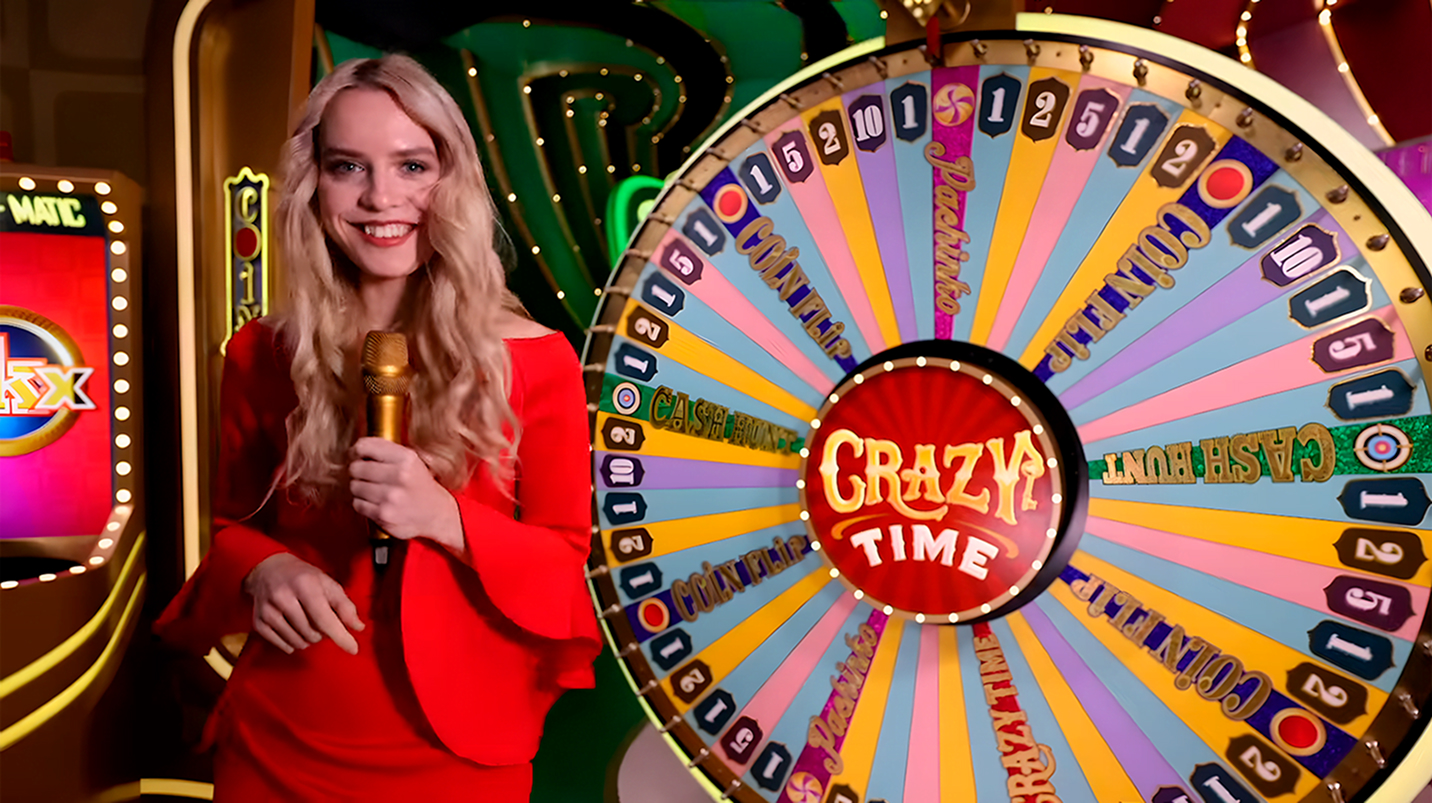
How a round is structured: wheel, pointer, Top Slot
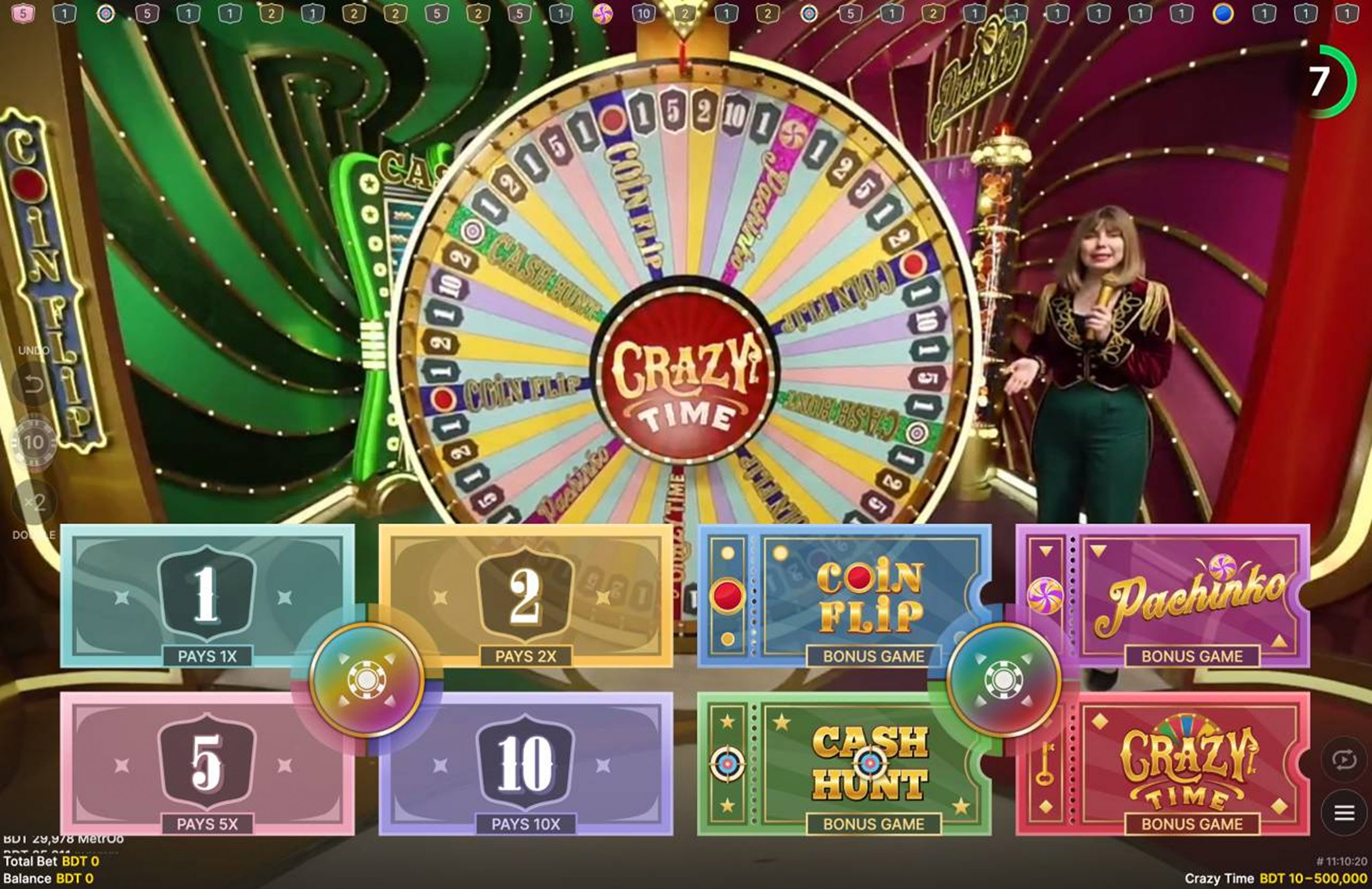
A round starts when bets are locked and the modifier in the top window (commonly called the Top Slot) is determined in parallel. This is a separate mini-draw of a symbol and a multiplier that can enhance one of the outcomes. Exact values may vary by game version and operator.
Then the host spins the wheel and waits for it to stop under the mechanical pointer. The pointer fixes the segment. If it matches the symbol from the top window, the modifier applies. If the segment is a “feature” that triggers an extra draw, the game switches to that scene with its own rules.
What you see is synchronized for the viewer. Under the hood, the process relies on a system that generates and validates a random outcome, described below.
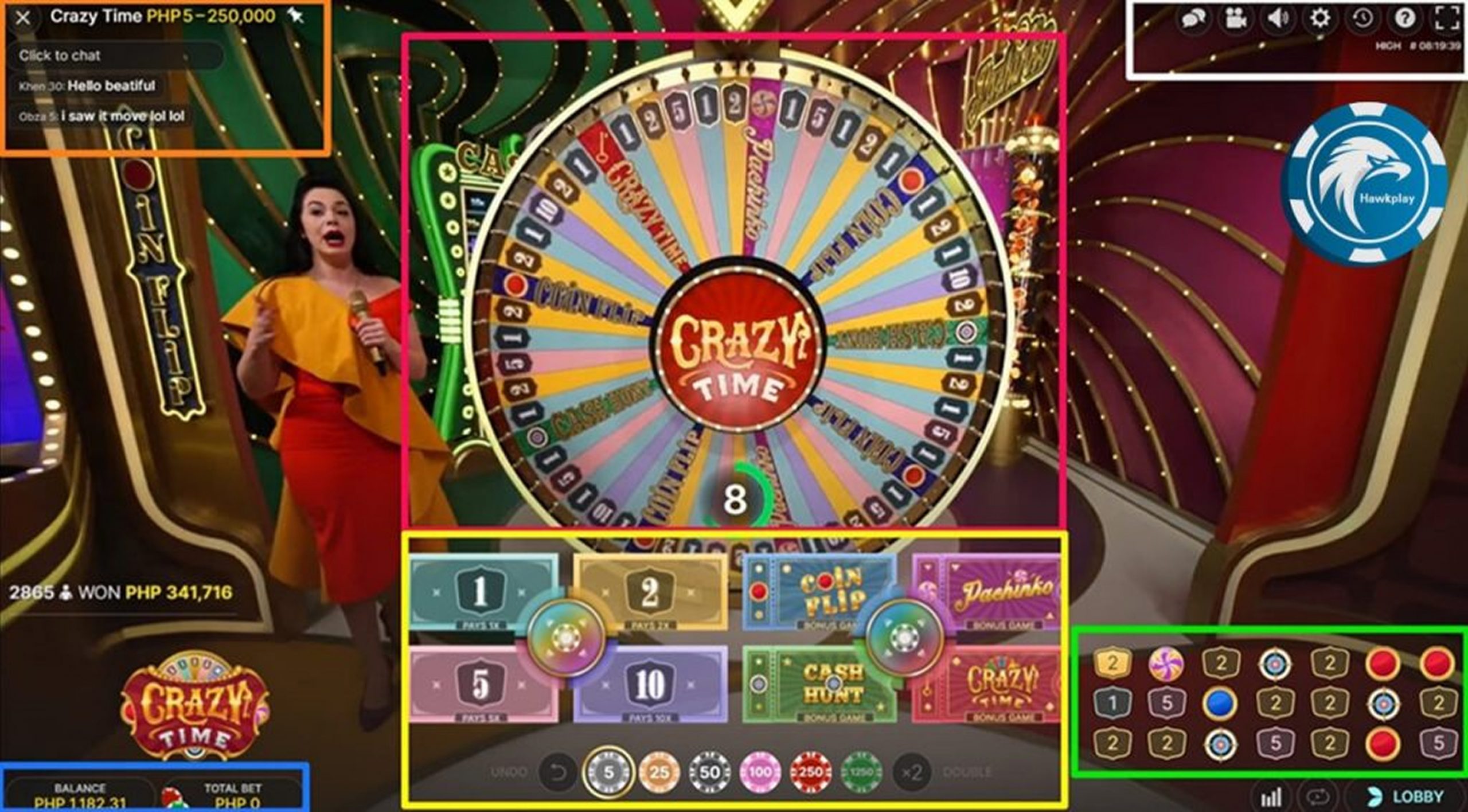
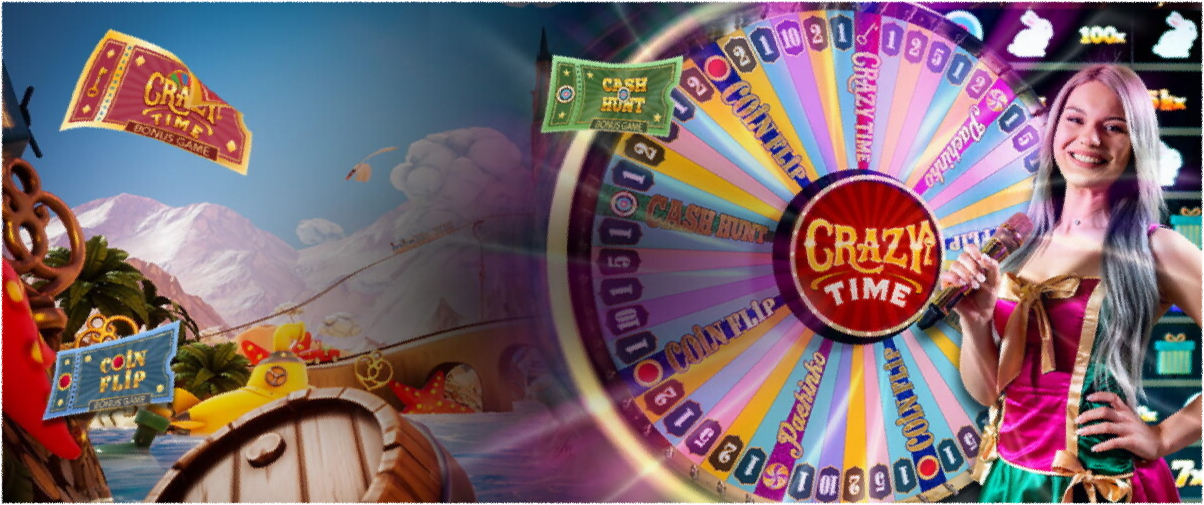
Wheel segments: roles and distribution
The wheel has two logical segment types: numeric and “feature” (transitions to additional scenes). Numeric segments resolve the round with simple base logic. Feature segments launch a separate draw with its own multiplier structure. Exact counts and proportions of segments may vary by game version and operator.
Distribution is not uniform. More frequent base outcomes coexist with rarer, higher-variance events. This balances tempo and attention without changing the math. The on-screen history shows past results but has no predictive power for the next round.
Summary table:
| Wheel element | What it means | When it triggers | What to remember |
|---|---|---|---|
| Numeric segment | Base round outcome | When the pointer stops on it | Frequency and payout logic depend on the version; exact values may vary |
| Feature segment | Transition to an extra draw | When the pointer stops on it | Rules, steps, and multipliers depend on the scene and version |
| Top-window symbol | Potential outcome modifier | If segment and symbol match | The boost follows version rules; exact values may vary |
This explains why “rare” events seem more “generous” and “frequent” ones look steadier. It’s a designed balance, not a bug.
Multipliers and modifiers: where they come from and how applied
A multiplier is a coefficient that scales a base outcome. In Crazy Time, modifiers can appear at two levels: in the top window before the wheel stops and inside feature scenes after entering them. Exact multiplier ranges may vary by game version and operator.
If the top window shows a symbol and the wheel lands on the corresponding segment, the base logic is boosted. Inside feature scenes, their own rules apply: pick-based choices, staged increases, ladders, and so on. The visuals clearly show sequence and source of the final number.
Key point: multipliers don’t “pull” from round history and don’t compensate prior losses. Each draw is self-contained. Larger coefficients occur through rare combinations of conditions, not through a “debt” the game owes.
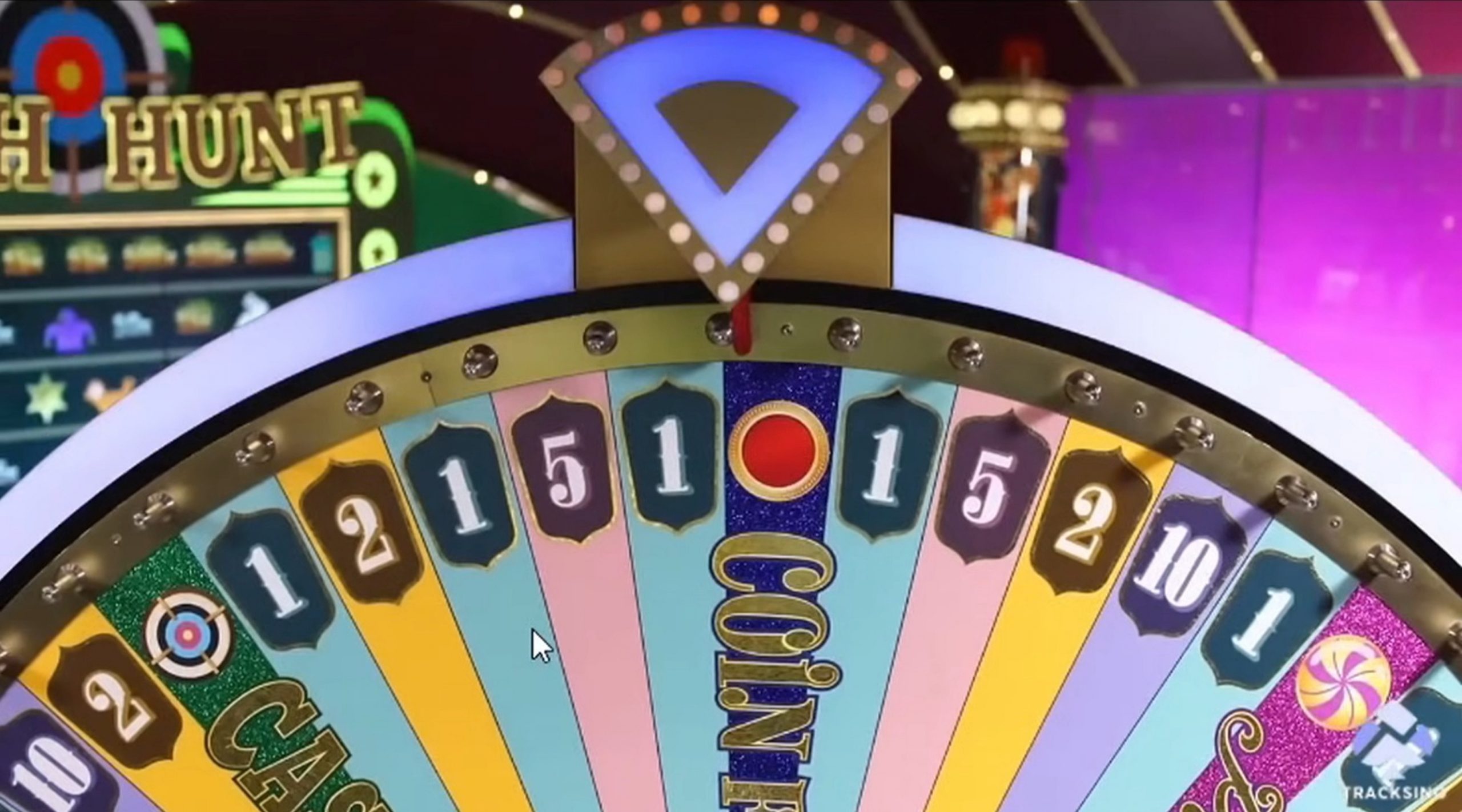
Randomness and fairness: how they’re ensured
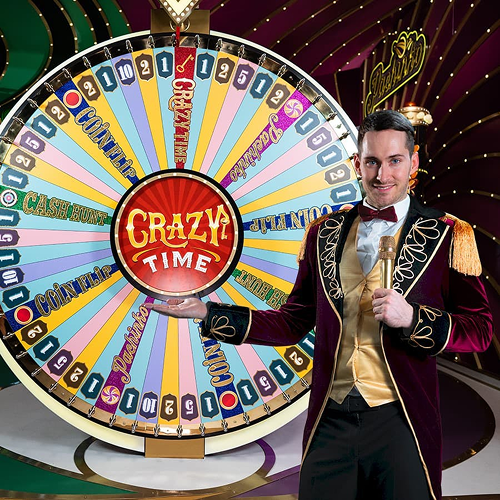
The outcome is a combination of physics and algorithms. The wheel is a physical object spun by a host, but “which segment is fixed” is not left to human factors. Modern live games control the result with a randomness system synchronized with studio equipment, removing effects from spin strength, camera angle, and other externals.
An RNG (random number generator) may determine the top-window modifier and/or parameters inside feature scenes. Validation includes internal checks for correctness and protocol compliance. Video and animations align with the already-determined outcome so the user sees a coherent experience without desync.
Practically, rounds are independent. Neither the previous spin’s duration nor streaks in the history bar affect the next result. That’s a basic principle of fair games and contradicts folk theories about “tweaks.”
Player misconceptions: where intuition fails
Several persistent cognitive traps are common with wheels.
-
 “The wheel remembers streaks.” The history exists for transparency, not as the game’s “memory.” Probabilities don’t shift because of prior outcomes.
 -
“The host can aim the segment.” Studio mechanics and outcome fixation remove personal influence. The sense of “control” comes from the live format.
-
“The pointer often hops borders, so odds are higher near edges.” The eye notices “near hits,” but that doesn’t improve predictability. A border is just another part of the wheel.
-
“Top Slot hasn’t matched for a while, so it’s due.” Independent events have no memory. Long gaps don’t “owe” a match.
-
“Chasing big outcomes by raising stakes after losses works.” That’s martingale thinking in a fixed-math game: risk grows geometrically while odds don’t.
Separating spectacle from math helps avoid overconfident forecasts.
What is actually under player control
Players don’t control the outcome, but they do control session context.
Stake size and structure Session length Observation without commitment Technical readiness Interface modes Breaks These controls don’t change mathematical return, but they improve the experience.
UX and visual effects: why it feels “dynamic”
Live shows combine randomness and direction. Cameras change angles, audio emphasizes peaks, the UI highlights matches and “near hits.” This improves engagement and makes a round readable without rules. Visual emphasis can amplify how “rare” or “generous” something feels.
The history bar and win highlighting serve two roles: verifiability and social proof. You see that the process is transparent and the community is active. These elements describe the past, not the future.
Behind the scenes are synchronized timers, stream latency, and animations. On weak connections, the client may “catch up” in jumps. The result doesn’t change, but perception suffers. Adjusting video quality and disabling nonessential effects on weak devices improves smoothness.
Performance and evolution: from “wheel of fortune” to multi-stage scenes
Modern live wheels are built for global audiences with varied devices and networks. The client adapts video quality, frame rate, and effects to conditions. Lower-bandwidth profiles preserve round integrity. On mobile, the UI simplifies while keeping key info: timer, stakes, history, and hints.
Design has evolved from “pure” wheels to hybrid formats: a separate top-window modifier, multiple scene types, and cascading multipliers. This diversifies rounds without changing the base independence. Specific parameters and structures may vary by version and operator.
The shift went from simple shows with direct payout logic to expressive systems where visual language helps decode complex states quickly. The aim is clarity for newcomers and enough depth for experienced players, while keeping draws independent.
Conclusions
-
The Crazy Time wheel combines a physical object, algorithmic randomness, and stagecraft. Players see intuitive elements — pointer, segments, top window — but the result is always set by an independent draw. Segments split into base outcomes and feature transitions; multipliers apply either through a top-window match or within scenes under their rules. Exact counts, limits, and ranges may vary by version and operator. Streaks, spin strength, and “near hits” don’t affect results. Under your control are stake structure, session length, technical setup, and breaks. Understanding this frame counters cognitive traps and false expectations.
FAQ
No. Studio mechanics determine the result via a randomness system synchronized with the physical spin. Spin strength or style doesn’t provide predictability.
No. History reports the past; rounds are independent.
That’s perception during stopping and frame catch-up. The result is fixed once and not redefined by animation.
No. They increase risk without changing odds. There’s no mathematical edge.
It adds an independent enhancement chance. Matches aren’t meant to be regular; when they occur, results are boosted per version rules.
Versions and settings may vary. Exact values may differ by game version and operator.
Live games rarely have true demos, but you can watch rounds without betting to learn tempo and UI.
Adaptive streaming. The outcome is fixed first; the client catches up. With good connectivity the desync is minimal.